

Apartamento inteiro
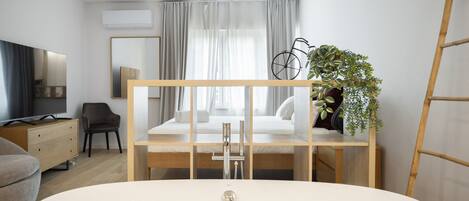
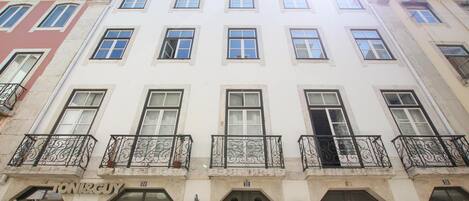
Carmo's Wonder: Charming 3 bedroom in Lisbon prime Location.
Galeria de fotos de Carmo's Wonder: Charming 3 bedroom in Lisbon prime Location.
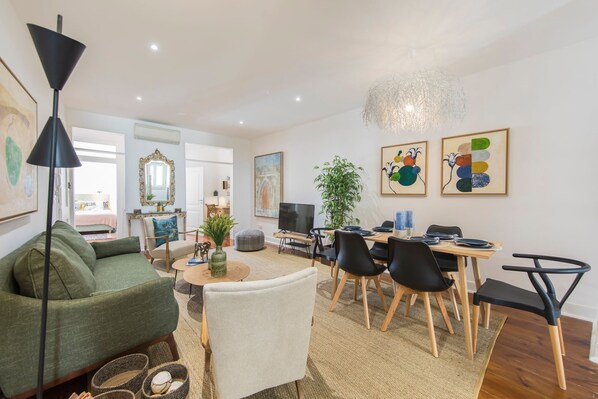
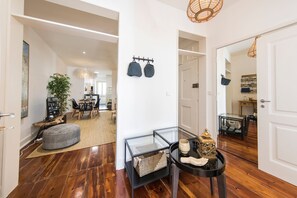
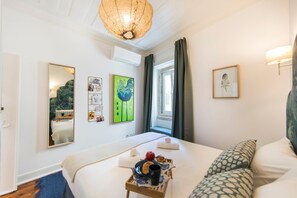
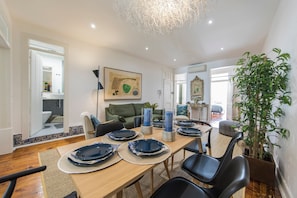
Avaliações
9,69,6 de 10
Extraordinária
Apartamento inteiro
3 quartos1 banheiroAcomoda 6 pessoas7 m²
Comodidades populares
- Banheira de hidromassagem
- Cozinha
- Lava-roupa
- Wi-Fi grátis
- Ar-condicionado
Adicione as datas e descubra os preços
Sobre esta propriedade
Carmo's Wonder: Charming 3 bedroom in Lisbon prime Location.
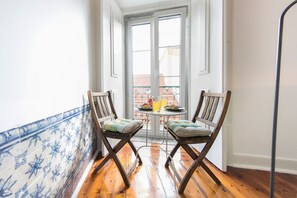
Excelente apartamento, com 3 quartos, uma varanda (estreita) com vista para o castelo de São Jorge, localizado numa das melhores zonas de Lisboa. Mesmo ao lado das melhores atrações da cidade! O apartamento está localizado no Chiado, um dos Bairros mais atractivos e interessantes do centro de Lisboa,
Charming 3 bedroom in prime location, at the heart of Lisbon Chiado-Carmo. In the heart of history, charming atmosphere, and relaxing living space. A metro accessible location, by the historic Largo do Carmo and at 5 min walk from the lively Bairro Alto district with some of Lisboners preferred trendy bars and restaurants. Attractions: Sāo Roque Church and Museu; Carmo Convent, Santa Justa lift, Glória funicular, the opera house: São Carlos theater and shopping at Rua Carmo and Rua Garrett.
The apartment is located in Chiado, The shopping hub of Lisbon. This vibrant and cosmopolitan area hosts a variety of charming old bookshops, local and major international fashion brand outlets, restaurants, and café´s. In fact, the Café Brasileira, one of the oldest café´s in the city, can be found here.
Chiado neighbors Baixa. Baixa is an elegant district that contains the grid of streets north of the famous Praça do Comércio, between Cais do Sodré, and the Alfama district beneath the São Jorge Castle. It then extends northwards towards the Rossio and Figueira squares, and one of the most important avenues in Lisbon, the 1100m long Avenida da Liberdade.
Other local attractions:
GARRET STREET
The easiest way walking to get to Baixa-Chiado is through Rua Garret. It hosts a number of remarkable historical shops, such as the Bertrand Bookshop, distinguished by the Guiness World Records as the world’s oldest bookshop founded in 1732 and other recommended spots such as the Armazéns do Chiado, the busy shopping mall of Chiado, and the Santini Ice Cream store located right opposite the mall.
ELEVADOR DE SANTA JUSTA
The famous elevator was inaugurated in 1902 and built by a Portuguese-French engineer who studied with the architect of the Eiffel tower, Mesnier du Ponsard. Using steam as an energy source, as it did back in the day, it takes you up to the top to admire the downtown landscape. It is also connected via a passage to the Carmo Convent and museum, another spot worth visiting in the area!
PRAÇA DO COMÉRCIO
Impossible to miss, the iconic Praça do Comércio, also called Terreiro do Paço, is the original spot where the royal palace was located until the massive destruction caused by the 1755 earthquake. It was recently considered as one of the most beautiful and perfectly dimensioned squares of Europe. You can also climb up the Archway of Augusta to get a spectacular view of the square, the river and the surrounding area.
AVENIDA DA LIBERDADE
The city’s version of Paris’ Champs Elysées. It’s a tree-lined boulevard noted for its high-end brand outlets, tailoring shops and café´s.
ROSSIO
Rossio has been a traditional meeting point for the people of Lisbon dating back to the 18th century. Some of the cafés and shops in the square, such as the Café Nicola, were frequented by famous poets such as Manuel Maria Barbosa du Bocage. Other traditional shops include the Pastelaria Suíça and the Ginjinha, where the traditional Portuguese liqueur (Ginjinha) can be tasted.
ALFAMA
Recognised as oldest district in Lisbon, Alfama is a traditional, tranquil and artisan neighborhood. It hosts a labyrinth of streets that are best explored without a guide or a map as an exciting museum,viewpoint, restaurant or funky store is just around the corner. Here also lies the heart of fado, the melancholic Portuguese genre of music whose origins can be traced back to the 1820´s in Lisbon. The famous Tram 28 also passes through this district, which connects the districts of Graça with Baixa through Alfama, thus it is perfect for both those that enjoy hill climbing, and those that do not.
SÃO JORGE CASTLE
Easily one of the most memorable monuments in Lisbon, the Moorish São Jorge Castle is one of the jewels of Lisbon, one that has overlooked the historic city of Lisbon and the Tagus River for over a millennium.
Comodidades da propriedade
Piscina/spa
- Banheira de hidromassagem
Internet
- Disponível no apartamento: Wi-Fi grátis
Cozinha
- Chaleira elétrica
- Cooktop
- Forno
- Geladeira
- Lava-louças
- Liquidificador
- Máquina de café/chá
- Micro-ondas
- Panelas, louças e utensílios de cozinha
- Toalhas de papel
- Torradeira
Opções para refeição
- Mesa de refeição
Quartos
- 3 quartos
- Roupas de cama fornecidas
Banheiro
- 1 banheiro
- Chuveiro
- Papel higiênico
- Produtos de toalete grátis
- Sabonete
- Secador de cabelo
- Toalhas fornecidas
- Xampu
Espaços comuns
- Mesa de refeição
Entretenimento
- TV com canais a cabo/via satélite
Áreas externas
- Sacada
Itens de lavanderia
- Instalações de lavanderia
- Máquina de lavar
Espaços de trabalho
- Cadeira para escrivaninha
- Escrivaninha
Conforto
- Aquecimento
- Ar-condicionado
Animais de estimação
- Não aceita animais de estimação
Acessibilidade
- Não é permitido fumar nesta propriedade
Serviços e conveniências
- Ferro e tábua de passar roupa
Destaques do local
- No centro da cidade
Recursos de segurança
- Propriedade sem detector de monóxido de carbono, mas com aparelhos a gás, conforme indicado pelo anfitrião (sugestão: levar um detector portátil)
- Propriedade sem detector de fumaça, conforme indicado pelo anfitrião
- Kit de primeiros socorros
- Extintor de incêndio
Informações gerais
- Janelas de vidro duplo
- Reciclagem
- Tamanho da unidade: 7 m²
- Uso parcial de iluminação LED
Propriedades semelhantes
City Stays Alegria Apartments
Centro de Lisboa
City Stays Alegria Apartments
Centro de Lisboa
- Cozinha
- Lava-roupa
- Wi-Fi grátis
- Ar-condicionado
7.8 de 10, Boa, 31 avaliações
7,8
Boa
31 avaliações
Cortes Apartment in Lisbon Historic
Centro histórico de Lisboa
Cortes Apartment in Lisbon Historic
Centro histórico de Lisboa
- Cozinha
- Lava-roupa
- Wi-Fi grátis
- Ar-condicionado
Baixa Vintage Three-Bedroom Apartment - by LU Holidays
Centro de Lisboa
Baixa Vintage Three-Bedroom Apartment - by LU Holidays
Centro de Lisboa
- Cozinha
- Lava-roupa
- Aceita animais
- Wi-Fi grátis
9.0 de 10, Maravilhosa, 16 avaliações
9,0
Maravilhosa
16 avaliações
O preço é de R$ 519
R$ 519
Total: R$ 933
inclui impostos e taxas
13 de out. – 14 de out.

Nomad s Downtown Lisbon - 3bdr S Juli o
Centro de Lisboa
Nomad s Downtown Lisbon - 3bdr S Juli o
Centro de Lisboa
- Cozinha
O preço é de R$ 1.098
R$ 1.098
Total: R$ 1.773
inclui impostos e taxas
3 de nov. – 4 de nov.

Santa Justa Prime Location
Centro de Lisboa
Santa Justa Prime Location
Centro de Lisboa
- Cozinha
- Wi-Fi grátis
- Ar-condicionado
- Micro-ondas
Marques DE Pombal Grand Prestige by Homing
Centro de Lisboa
Marques DE Pombal Grand Prestige by Homing
Centro de Lisboa
Nomad s Downtown Lisbon - 3bdr Charming Memory
Centro de Lisboa
Nomad s Downtown Lisbon - 3bdr Charming Memory
Centro de Lisboa
- Serviço de arrumação

LS48 Prime Location Upscale Apartment
Centro de Lisboa
LS48 Prime Location Upscale Apartment
Centro de Lisboa
- Cozinha
- Wi-Fi grátis
- Ar-condicionado
- Camas/berços extras
O preço é de R$ 728
R$ 728
Total: R$ 1.391
inclui impostos e taxas
3 de nov. – 4 de nov.

Historical Gem in Baixa
Centro de Lisboa
Historical Gem in Baixa
Centro de Lisboa
- Cozinha
- Lava-roupa
- Aceita animais
- Wi-Fi grátis
9.2 de 10, Maravilhosa, 39 avaliações
9,2
Maravilhosa
39 avaliações

Hideaway Family Apartment | Top Floor | Wi-Fi
Centro de Lisboa
Hideaway Family Apartment | Top Floor | Wi-Fi
Centro de Lisboa
- Cozinha
- Lava-roupa
- Micro-ondas
2.0 de 10, 1 avaliação
2,0
1 avaliação
O preço é de R$ 1.618
R$ 1.618
Total: R$ 2.068
inclui impostos e taxas
15 de out. – 16 de out.
Políticas
Check-in
Check-in a partir de 14h
Idade mínima para o check-in: 18
Check-out
Check-out até 10h.
Instruções especiais para o check-in
Você vai receber um e-mail do anfitrião com as instruções para o check-in e check-out.
A informação fornecida pela propriedade pode ser traduzida com ferramentas automáticas de tradução.
Animais de estimação
Animais de estimação não são aceitos
Crianças e camas extras
Crianças são bem-vindas
Eventos
Não permite a realização de eventos
Política para fumantes
Não é permitido fumar
Informações importantes
O que você precisa saber
Pessoas extras podem incorrer em taxas adicionais que variam dependendo da política da propriedade.
Documento de identificação oficial com foto e cartão de crédito, cartão de débito ou depósito em dinheiro podem ser exigidos no momento do check-in para despesas extras.
Solicitações especiais estão sujeitas à disponibilidade no momento do check-in e podem incorrer em taxas adicionais. Essas solicitações não estão garantidas.
Esta propriedade aceita dinheiro.
Festas ou eventos de grupos no local são estritamente proibidos
Aceita-se aluguéis de longa duração
O anfitrião informou que a propriedade não tem detectores de monóxido de carbono, mas tem aparelhos a gás. Leve um detector portátil com você na viagem.
O anfitrião informou que a propriedade não tem detector de fumaça.
Os recursos de segurança disponíveis na propriedade incluem extintor de incêndio e kit de primeiros socorros.
Esta propriedade é gerenciada por meio da Vrbo, um de nossos parceiros. Você vai receber um e-mail da Vrbo com um link para uma conta, onde pode alterar ou cancelar a sua reserva.
Número de registro da propriedade 58749/AL
Informações a área
Com ótima localização em Lisboa, este apartamento fica no centro da cidade. Duas das principais atrações da região, Elevador de Santa Justa e Catedral de Lisboa (Sé) são locais muito procurados pelos visitantes, que também são atraídos pelas belezas naturais em Praia da Costa da Caparica e Praia de Carcavelos. Museu Nacional de História Natural e da Ciência e Museu do Fado também valem a visita. Confira nosso guia de viagem sobre Lisboa.
Ver mais apartamentos - Distrito de LisboaLisboa, Lisboa
Nos arredores
 Praça do Rossio3 min de caminhada - 0.3 km
 Elevador de Santa Justa5 min de caminhada - 0.5 km
 Avenida da Liberdade5 min de caminhada - 0.5 km
 Praça dos Restauradores7 min de caminhada - 0.6 km
 Praça do Comércio8 min de caminhada - 0.7 km
Opções nos arredores
- Parada Largo Trindade Coelho - 2 min de caminhada
- Estação Rossio - 6 min de caminhada
- Aeroporto Humberto Delgado (LIS) - 25 min de carro
Restaurantes
- Toca da Raposa1 min de caminhada
- Sinal Vermelho2 min de caminhada
- Bistro 100 Maneiras2 min de caminhada
- El Rei D. Frango3 min de caminhada
- Taberna Do Avillez1 min de caminhada
Perguntas frequentes
Carmo's Wonder: Charming 3 bedroom in Lisbon prime Location. é ideal para quem viaja com animais de estimação?
Não, animais de estimação não são permitidos nesta propriedade.
Qual é o horário de check-in em Carmo's Wonder: Charming 3 bedroom in Lisbon prime Location.?
Horário de início do check-in: 14h.
Qual é o horário de check-out em Carmo's Wonder: Charming 3 bedroom in Lisbon prime Location.?
Horário de check-out: 10h.
Onde fica Carmo's Wonder: Charming 3 bedroom in Lisbon prime Location.?
Em Centro de Lisboa, este apartamento fica a 5 minutos a pé de Convento do Carmo e Elevador de Santa Justa. Praça do Rossio e Avenida da Liberdade também ficam a 10 minutos. Até a Parada Largo Trindade Coelho, são apenas dois minutos de caminhada, e até a Parada Rua São Pedro de Alcântara, a 3 minutos.
Avaliações sobre Carmo's Wonder: Charming 3 bedroom in Lisbon prime Location.
Avaliações
9,6